
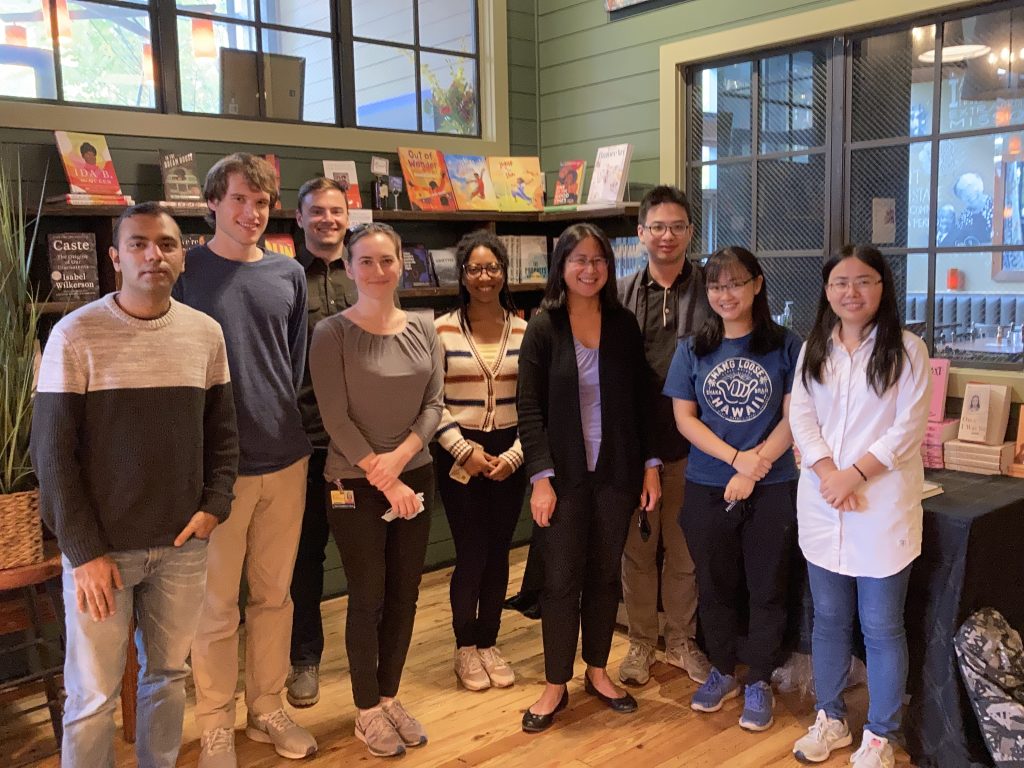
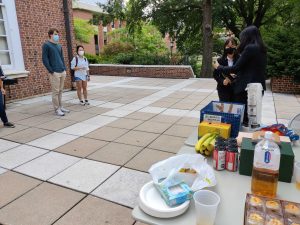
We had a lovely farewell lunch for Tracy who will be moving, with her newly conferred PhD, to a new postdoctoral position in the Department of Biomedical Engineering at Columbia University. We will miss you in the lab.
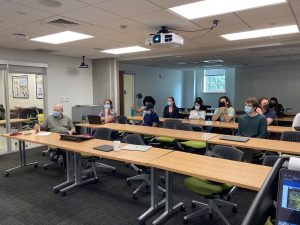
Congratulations to Dr. Yik Tung Tracy Ling for her successful dissertation defense! It was our lab’s first dissertation defense in the COVID era and participants joined in person as well as on Zoom. The hybrid set up allowed many alumni of the Nguyen Lab and ME Department to join in the open portion of the defense, and made the special occasion feel even more special.
The Effect of Microstructure on the Pressure-Induced Mechanical Responses at the Optic Nerve Head
Glaucoma is the leading cause of irreversible blindness in the world. Patients suffer from gradual loss of vision due to degeneration of the retinal ganglion cell (RGC) axons at the optic nerve head (ONH). A major risk factor for glaucoma is intraocular pressure (IOP) and the increase in IOP initiates biomechanical events at the ONH prior to axonal damage. However, the exact injury mechanism remains unknown. Lamina cribrosa (LC), as a load bearing structure that spans the ONH, serves to protect the RGC axons from IOP-induced deformation. The LC is made up of a meshwork of collagen beams. Within the LC, the non collagen pore spaces are spanned by a network of astrocyte cells. Together, the LC structure and the astrocytic network provide mechanical support to the RGC axons as the axons exit the eye wall and enter into the optic nerve canal. Inflation tests of the human eyes have shown that IOP-induced strain response in the LC varied regionally. The pattern of the strain variation corresponded to the pattern of axonal damage in glaucoma patients. It is hypothesized that variations of microstructure in the LC contributed to the variations in IOP-induced strains. This may translate to unequal deformation of the astrocytic networks among different LC pores, causing some axons to be more susceptible to glaucomatous injury. Therefore, the objective of this work was to first investigate the effect of structural properties of LC on the regional strain responses, then to compare the structural difference in astrocytic network after IOP elevation, and finally to probe into the effect of astrocytic structure on the strains experienced by the axons using finite element modeling.
I
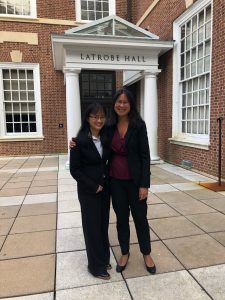
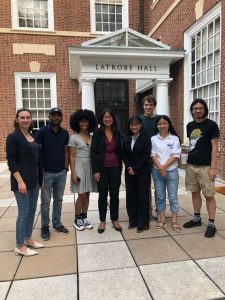
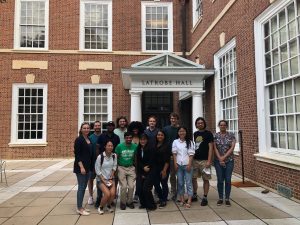
Yupin graduated with her MS in May and is moving to NYC to work as a design engineer at the Hospital for Special Surgery. Thank you Yupin for your hard work. We will miss you in the lab.
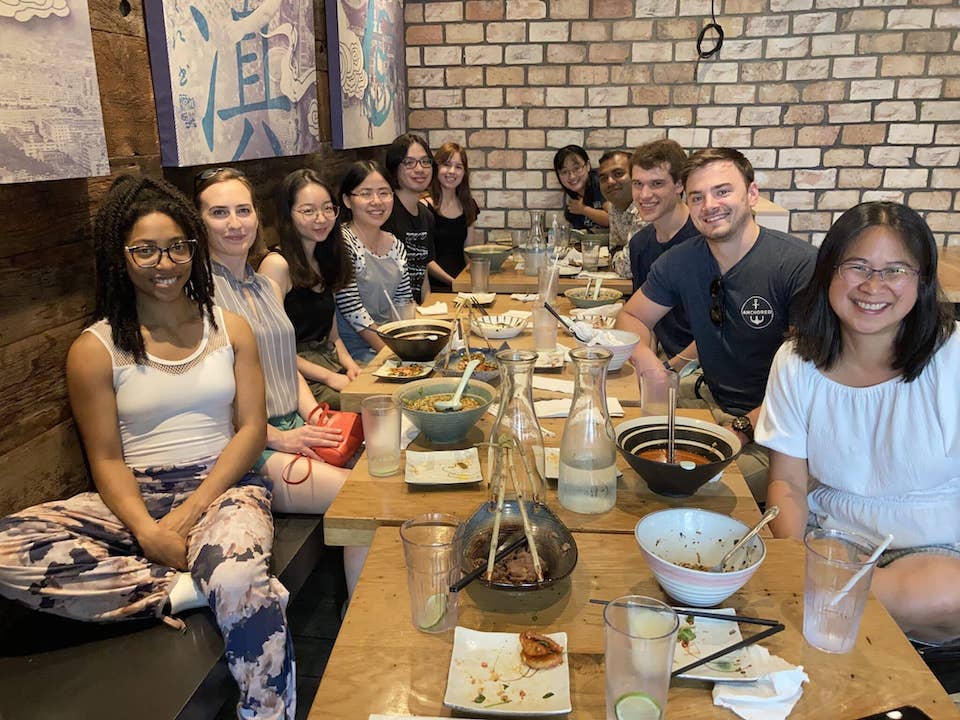
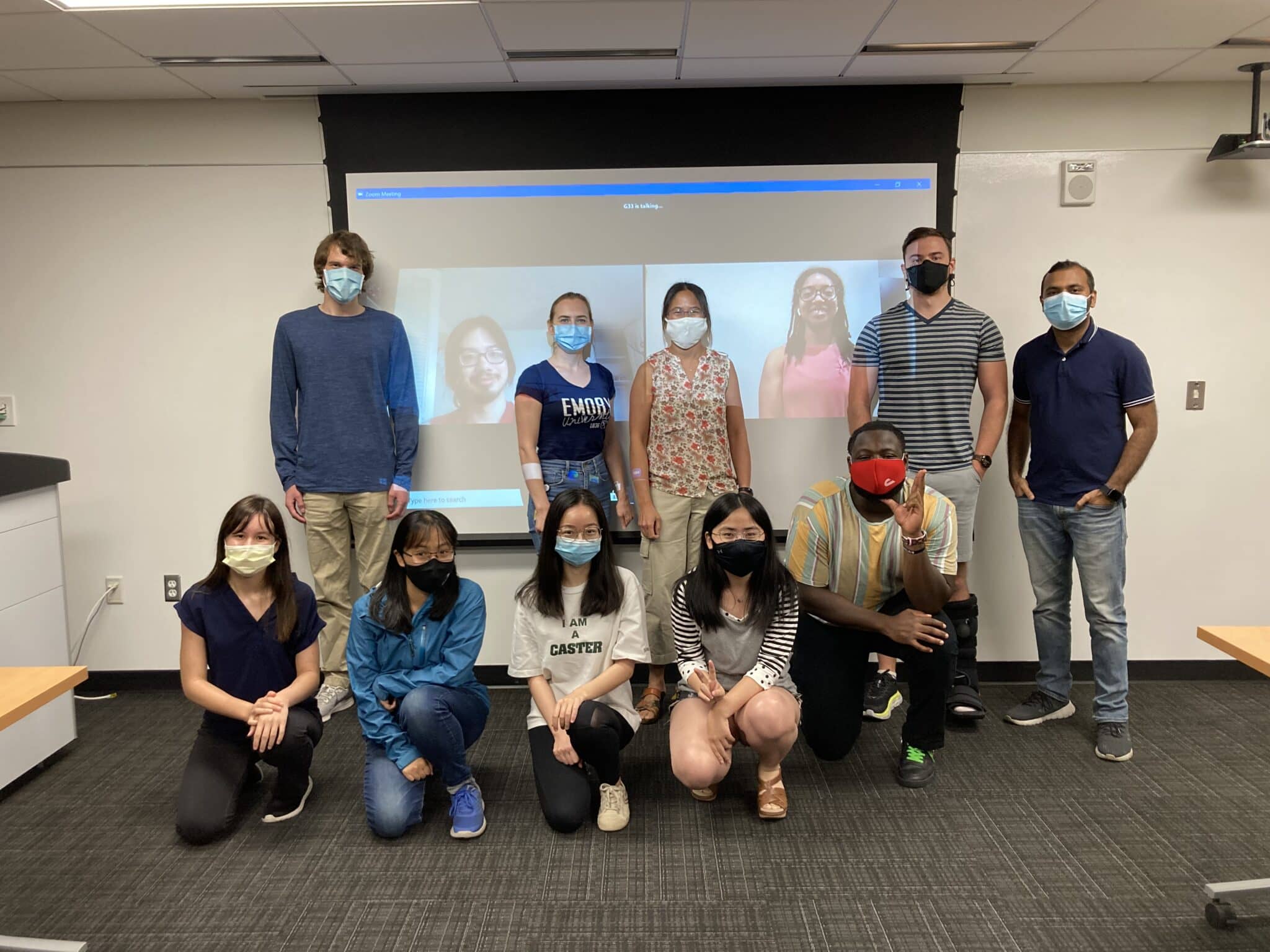
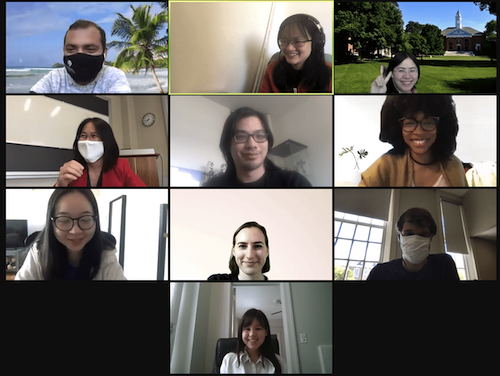
The pandemic has changed nearly all of our daily rhythms and yearly traditions but it hasn’t erased them altogether. Instead of our annual holiday party, we had an outdoor fall lab BBQ with fire pit and s’mores. While the masks were different, the good food and good company was the same.
The holiday party has become a fun tradition in the lab. We eat lots of food, do a white elephant gift exchange, play board games, take a new group picture, and toast to a new year.
I had a wonderful opportunity to visit Zheliang University in Hangzhou, China, where Rui Xiao and Zheng Jia are now professors. They organized a wonderful visit for me, capped with a joint group meeting of their students. They each presented their research projects. I was impressed by the depth and creativity of their works. It’s wonderful to see how well Zheng and Rui are both doing in their career.
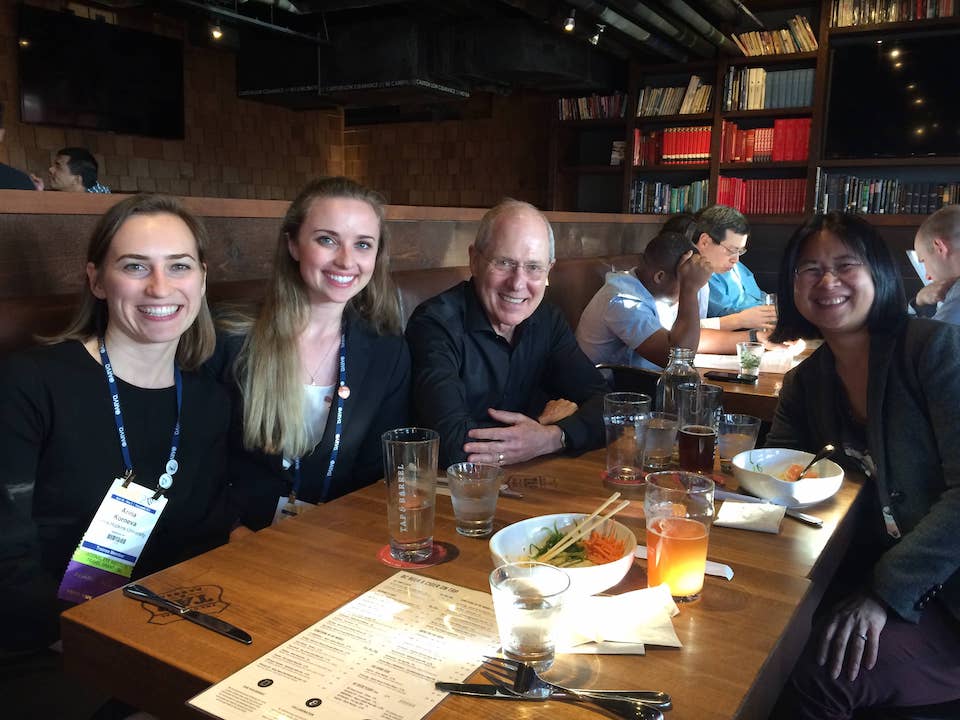
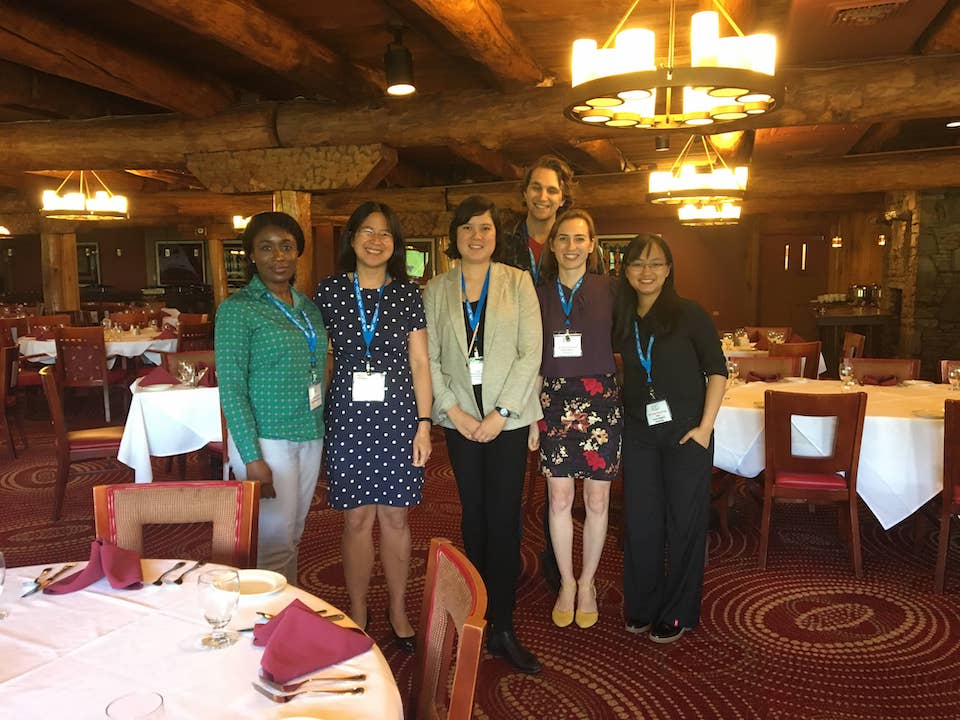
We had an impromptu lunch catching up with current and former lab members at the Summer Biomechanics, Bioengineering and Biotransport Conference at Seven Springs, PA. Sara Bentil is 3 years into her Assistant Professor position at Iowa State and attending her first SB3C. Kristin Myer is newly tenured at Columbia and returning from a sabbatical and Dan Midgett is doing new and cool things at in biomechanics and cardiology at Yale. Along with Arina Korneva and Tracy Ling, it was a great group.
Congratulations to Dr. Jiayu Liu for his successful dissertation defense, “Mechanics-Based Design of Stimuli-Responsive Hydrogel Structures and Devices“.
Abstract: Stimuli-responsive hydrogels undergo large swelling in response to a wide variety of stimuli, such as temperature, biochemical molecule, pH, electric or magnetic field. Programmable shape changing devices made from stimuli-responsive hydrogels have potentially wide-ranging applications, including drug delivery, soft robotics, and biomedical devices. The current main challenges of advancing stimuli-responsive hydrogel devices into real-life applications are in both the design and fabrication stage. Simple strategies based on mechanics are needed to guide the design of hydrogel devices with complicated shape changes. Traditional fabrication methods such as 2D lithography limits the number of achievable device geometries. The objective of this work is to develop a methodology that covers from constitutive modeling, finite element simulation, mechanics-based design rules, to experimental validation. This hybrid modeling design methodology provides an efficient design framework for stimuli responsive hydrogel structures and devices of functional importance. In the first part of this work, we applied a chemo-mechanical constitutive model to describe the swelling and mechanical behavior of a novel DNA hydrogel (AAm-co-DNA). In order to estimate the elastic modulus of DNA hydrogel that cannot be measured by traditional experimental approach, we used finite element analysis to study the curving of bilayer beams composed of the DNA gel and a passive gel (polyacrylamide, pAAM), and compared the finite element simulations to the experiment result. We further applied the finite element model to investigate the influence of bilayer geometric and material properties on the equilibrium curvature. We used the modified Stoney formula for the curving of film/substrate system to develop a simple design rule for predicting the equilibrium curvature of bilayer gel beams with different dimensions and material properties. In the second part of this work, we report the design, fabrication, and characterization of segmented 3D printed gel tubes composed of an active thermally responsive swelling gel (poly N-isopropylacrylamide, pNIPAM) and a passive thermally nonresponsive gel (pAAM). Using finite element simulations and experiments, we report a variety of primitive shape changes including uniaxial elongation, radial expansion, bending, and gripping based on different segment arrangements of two gels. The assembly of shape-changing primitives could be directly printed and used to achieve complicated tasks. In the final part of this work, we report on the unusual periodic buckling behavior of a 4D printed tubular structure, composed of alternating vertical strips of pNIPAM segments and pAAM segments. The tube design was inspired by the buckled surfaces observed in nature, such as on cacti and euphorbias. We found that the tubes show tunable periodic buckling modes in water at the room temperature, due to the development of compressive stresses in the soft swellable segments induced by the constraint of the stiff non-swellable segments. We developed finite element models to explore the design space and investigate the effects of geometric and material design parameters on the buckling mode. Modeling the swellable segments as the buckling of a bar on an elastic foundation, we derived a bucking parameter that combines the effects of geometry and material properties to predict the transition between different periodic buckling modes and constructed a phase diagram to guide the design of periodic buckling tubes for bioinspired functional gel structures.
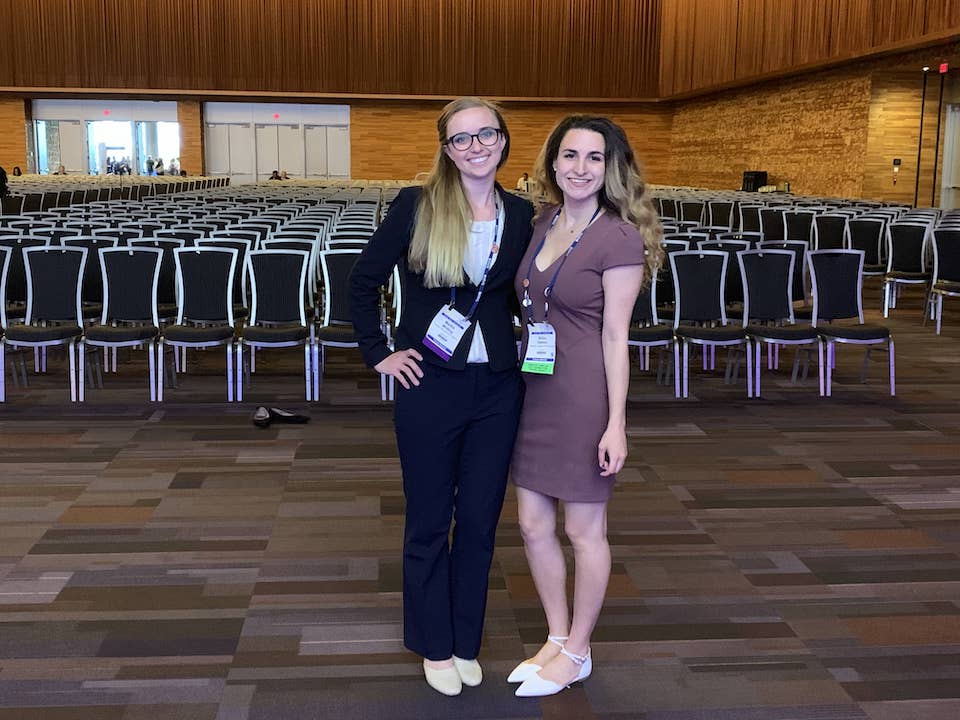
One of the pleasures of teaching is seeing how well your former students are doing in their new adventures. I ran into JHU ME alumni Bailey Hannon and Martha Whiting, BS 2015 at ARVO. I taught them both in Biosolids and Martha built an essential test fixture for my lab as an REU student. Both were presenting their research and Bailey gave a great talk on using machine learning to automatically count axons. Bailey is a 4th year PhD student in BME at Georgia Tech and Martha is a 3rd year MD student at U. of Maryland.